Compare

Panic Attack vs Heart Attack: How to Tell the Difference

Understand the differences between panic attack vs heart attack to manage symptoms and seek proper care when needed.

Three things that matter most

Panic attack vs heart attack is one of the most searched health comparisons for a good reason: the two can feel almost identical in the moment, and getting it wrong in either direction carries real risk. This guide breaks down the differences — but the short version is simple: when unsure, always seek emergency care first.

Read this first

This article is not a substitute for emergency evaluation. New, unexplained chest pain should always be checked by a medical professional — it’s far safer to be evaluated and find out it was panic than to assume panic and be wrong.

Symptoms they share

  • Chest pain or tightness
  • Rapid heartbeat
  • Shortness of breath
  • Sweating
  • Dizziness or lightheadedness
  • A sense of impending doom

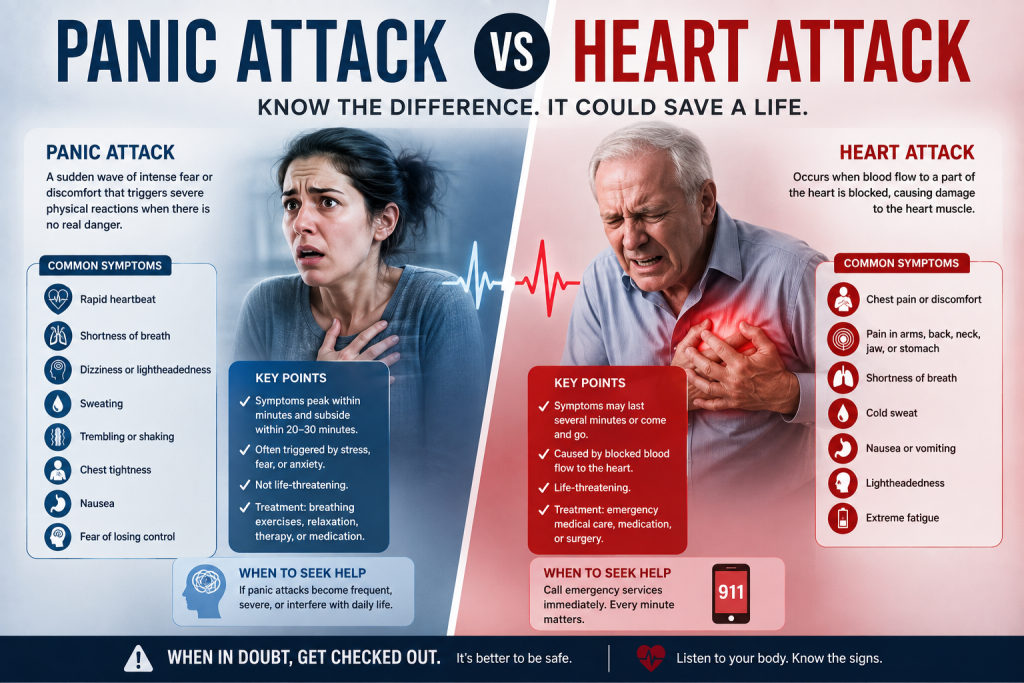
Where panic attack vs heart attack symptoms tend to differ

Feature Panic Attack Heart Attack
Onset Sudden; often peaks within 10 minutes Often builds gradually, though it can also begin suddenly
Pain Location Chest tightness or discomfort, often centered Chest pain that may radiate to the arm, jaw, neck, shoulder, or back
Duration Usually improves within 20–30 minutes Often persists, worsens, or comes in waves without treatment
Trigger Pattern Often associated with stress or no obvious trigger May occur during physical exertion or even at rest

Note: Symptoms can overlap. If someone has chest pain or pressure and it’s unclear whether it’s a panic attack or a heart attack, they should seek emergency medical care immediately rather than assume it’s anxiety.

panic-attack-vs-heart-attack-whats-the-differnce

Why you shouldn’t try to self-diagnose in the moment

Even doctors use tests, not symptom checklists alone, to distinguish a panic attack from a cardiac event — because the overlap is genuinely significant, especially in people having their first panic attack. The safest approach to panic attack vs. heart attack uncertainty is always the same: treat new or severe chest pain as a potential emergency until it’s ruled out.

If you have recurring panic attacks

Once a cardiac cause has been ruled out by a professional, people with a confirmed pattern of panic attacks often learn to recognize their own personal pattern more confidently over time — but that recognition should always start with a real evaluation, not an assumption.

Can a panic attack actually cause a heart attack?

In someone with a healthy heart, no — a panic attack does not cause a heart attack. In people with existing cardiac conditions, extreme stress can be a contributing factor, which is another reason evaluation matters.

Should I call emergency services if I think it’s “just” panic?

If there’s any uncertainty, yes. Emergency responders are equipped to evaluate quickly, and it’s always safer to be checked than to guess wrong.

When in doubt, treat it as an emergency

This guide is educational — it never replaces emergency medical evaluation for chest pain.